UPC vs. EAN: Which Barcode Does Your Product Need?
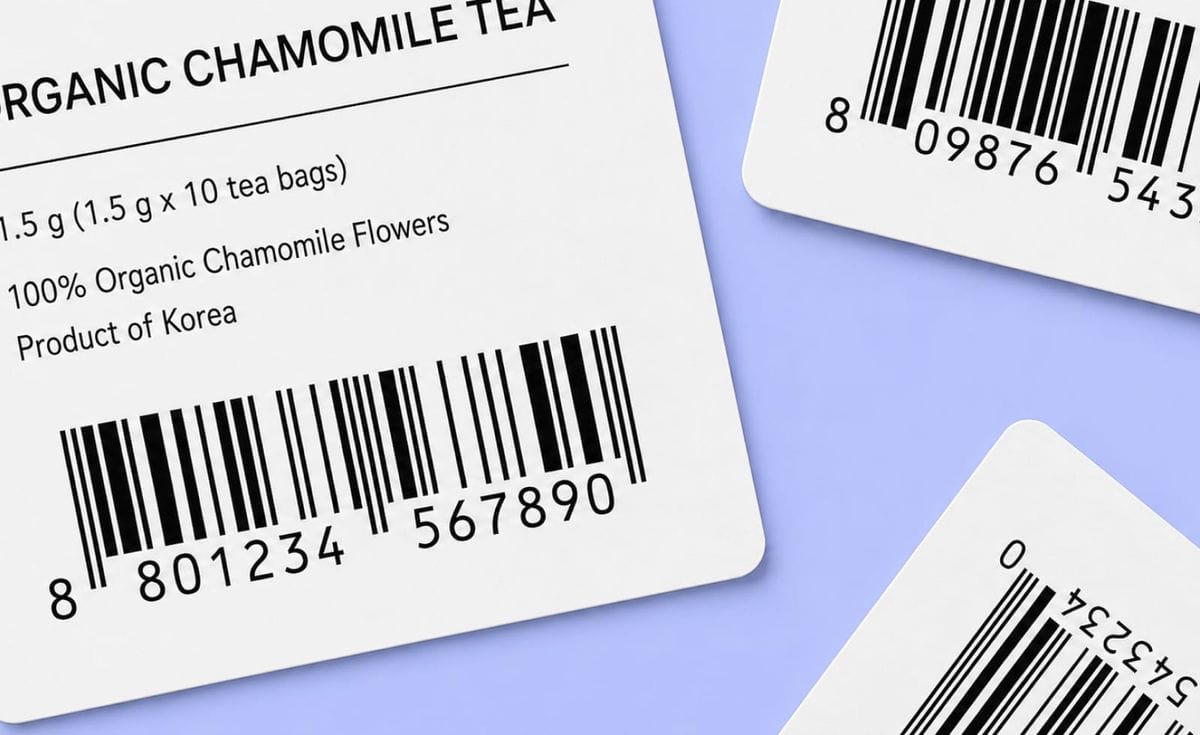
If you search "how to get a barcode" on Google, you'll see several formats: UPC, EAN, Code 128, ITF, GTIN — but most small sellers only need a subset of these.
For a product going on a store shelf or an online marketplace, only two of them really matter: UPC and EAN. Both are the standard retail barcodes used around the world, and both come from the same source.
Here is what separates them, when you need a GS1 code, where to license them, and an upcoming change in 2027 that will put a second barcode on retail packaging.
UPC, EAN, GTIN: What's the difference?
Both barcodes come from GS1, a nonprofit that sets product identification standards used in more than 100 countries. GS1 assigns each product a Global Trade Item Number, or GTIN, which is a unique string of 8, 12, 13, or 14 digits. The barcode itself—the pattern of black bars you're familiar with—is that number in a form a scanner can read.
Sellers often use "GTIN" and "UPC" as if they mean the same thing. But GS1 draws a clear line between them: the GTIN is the number that identifies the product, and the UPC is the barcode that carries that number so a scanner at a checkout counter or a distribution center can read it.
- UPC-A holds a 12-digit GTIN (GTIN-12) and is the format used across the U.S. and Canada.
- EAN-13 holds a 13-digit GTIN (GTIN-13) and is the format used across most of the rest of the world.
Each has a shorter version for small packaging, UPC-E and EAN-8, both compressed to 8 digits for items like a stick of gum or a small cosmetic tube.
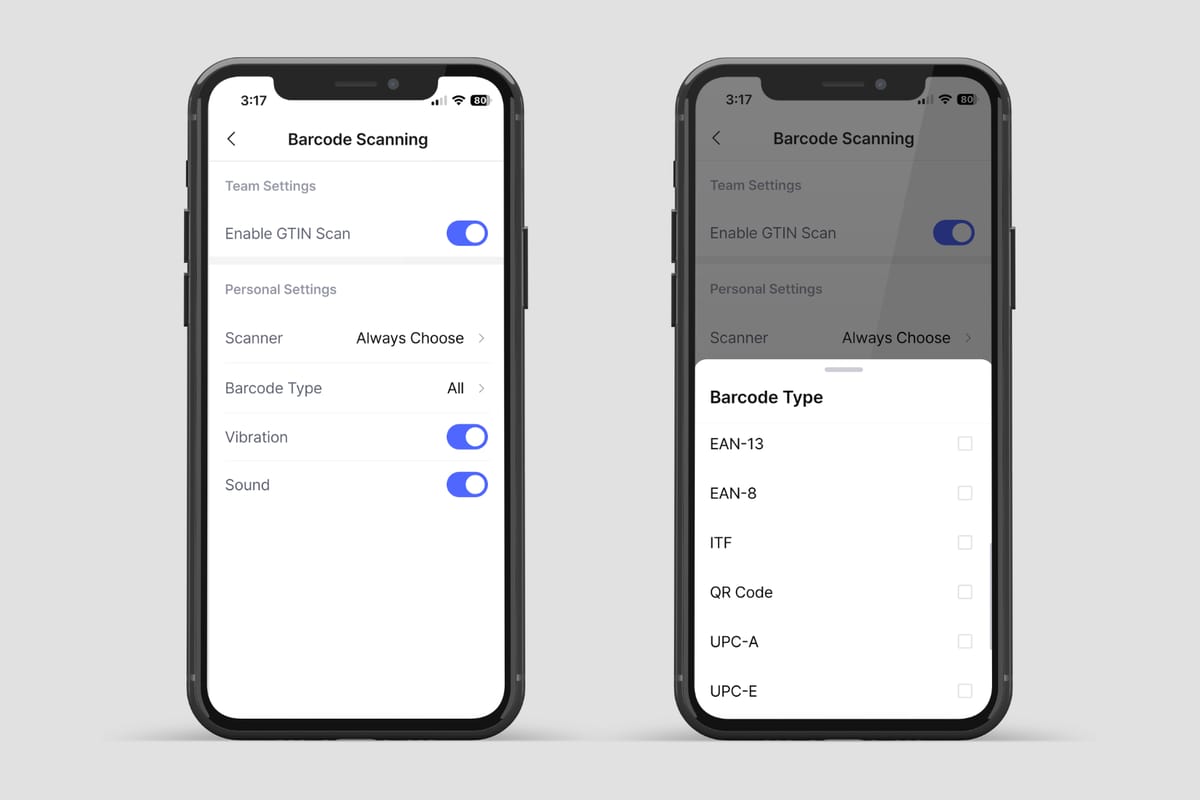
U.S. checkout scanners read both EAN-13 and UPC-A, so a 13-digit code will scan at a register. What differs is who's buying it. Some retailers and marketplaces ask suppliers for a 12-digit UPC-A specifically. Before you commit to a format, check each buyer's exact barcode requirement and their vendor guide. (A printed code is expensive to change later!)
When is a GS1 barcode required?
A GS1 barcode is required only when the product will be sold through a retailer or marketplace that scans it at checkout or verifies it in a catalog. For tracking stock inside your own business, receiving shipments, counting, and moving items between locations, you do not need a GS1 number.
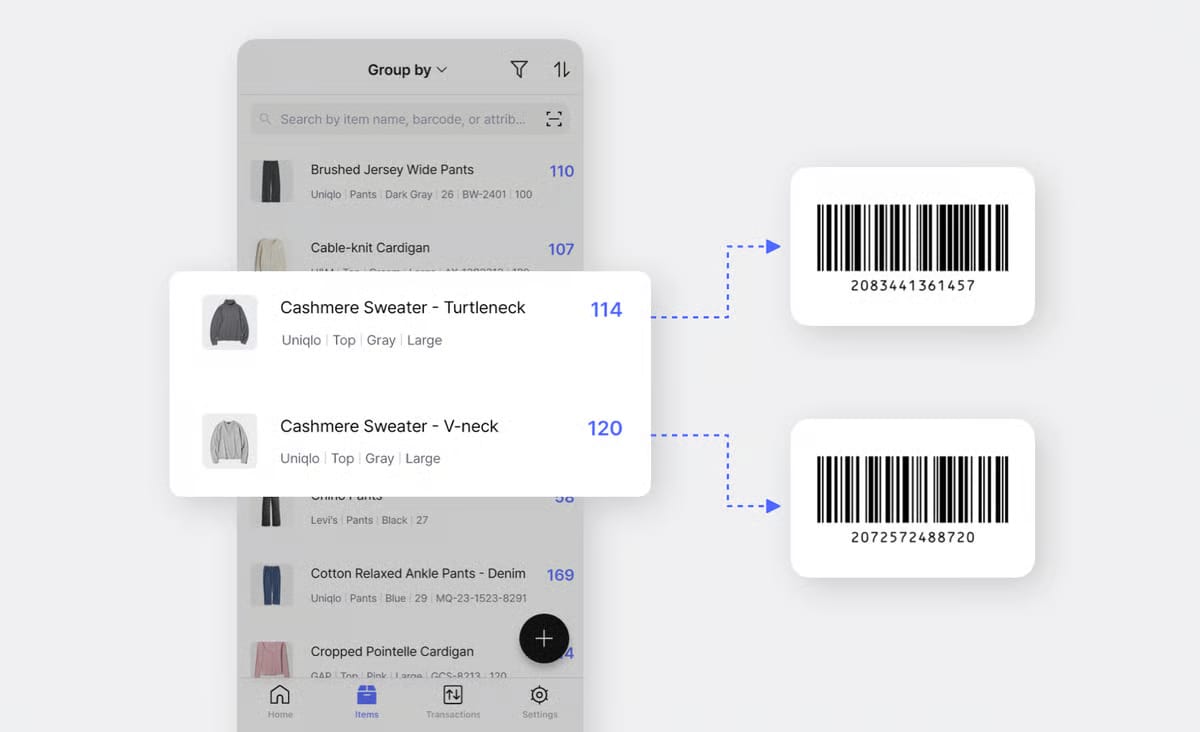
An internal barcode you generate yourself works for that, and it costs nothing. 🙌BoxHero's free barcode tool covers this case.
How to get a UPC or EAN barcode in the US
In the U.S., retail barcodes come from GS1 US, the American member organization of GS1. There are two ways to license the numbers.
- A single GS1 US GTIN costs a one-time $30 with no annual renewal fee. It suits a seller listing a handful of products.
- A GS1 Company Prefix covers larger catalogs. It assigns a block of numbers you can use for many products, cases, and coupons, and it carries an initial fee based on how many numbers you need plus an annual renewal fee. Published first-year figures start at a few hundred dollars and increase with the number of codes you license.
Once you license the number, the GS1 US Data Hub generates the barcode image as a PNG or EPS file at one fixed size.
Why cheap reseller barcodes get rejected on Amazon
Search for barcodes and you will also find third-party sellers offering UPC codes for a few dollars, far below GS1's price. These codes are real; they come from GS1 company prefixes bought before 2002 that remain legally transferable under a court settlement, and for some purposes they scan fine.
The problem shows up on Amazon.
Amazon checks the barcode you enter against the GS1 database and expects the brand and company on record to match your listing. Amazon's barcode policy states that it verifies UPCs through the GS1 database and treats codes that do not match GS1's information as "invalid."
A reseller code registered to the reseller's original company name can fail that check. Even when the code scans, a listing may be rejected for an invalid GTIN.
Sunrise 2027: the change coming to retail barcodes
The UPC has carried retail products since 1974. It's now getting a second code alongside it. GS1's Sunrise 2027 initiative sets a target:
"By the end of 2027, retail point-of-sale systems should be able to read and process 2D barcodes in addition to the 1D barcodes they read today."
GS1 US calls it a "pivotal shift" for retail; it's the biggest change to the retail barcode since UPC's introduction.
The reason is space:
- A 1D barcode (UPC or EAN code) holds one piece of information: the product's ID number — a.k.a. the GTIN.
- A 2D barcode (QR codes and GS1 DataMatrix codes) holds several thousand characters: the GTIN plus a batch number, an expiration date, a serial number, and a web link tied to the product.
What does this mean for you?
For a small seller, three things keep this in proportion:
- Your current barcode isn't going away. UPC is not being banned. During the switch, GS1 suggests printing both the 1D and 2D barcode on the same package. Store scanners are still catching up, so the striped barcode has to stay for now.
- There's no fine for skipping it. Sunrise 2027 is an industry initiative, not a government mandate. You won't be fined if a product in 2028 still carries only the old barcode.
- The pressure comes from large retailers. Walmart, Target, and other large chains are building 2D scanning into checkout, and they set the barcode rules their suppliers follow.
The shift is already underway. GS1 reports it's being tested in 48 countries representing 88% of the world's GDP.
But for a small seller today, the actual step is smaller than the headline suggests: just keep your regular UPC or EAN barcode for now, and add a QR code to your packaging as your retail partners ask for it.
Turning the number into a printed label
GS1 US gives you the number and a plain barcode image, not the finished retail label with your product name, options, and logo. Most people open the image in a design program like Photoshop or Illustrator and build the label around it.
The BoxHero Label Designer removes that step. Enter your GTIN as the item's barcode, then choose EAN-13 in the label designer. BoxHero renders the barcode at the size and position you set, with no separate print file to download.
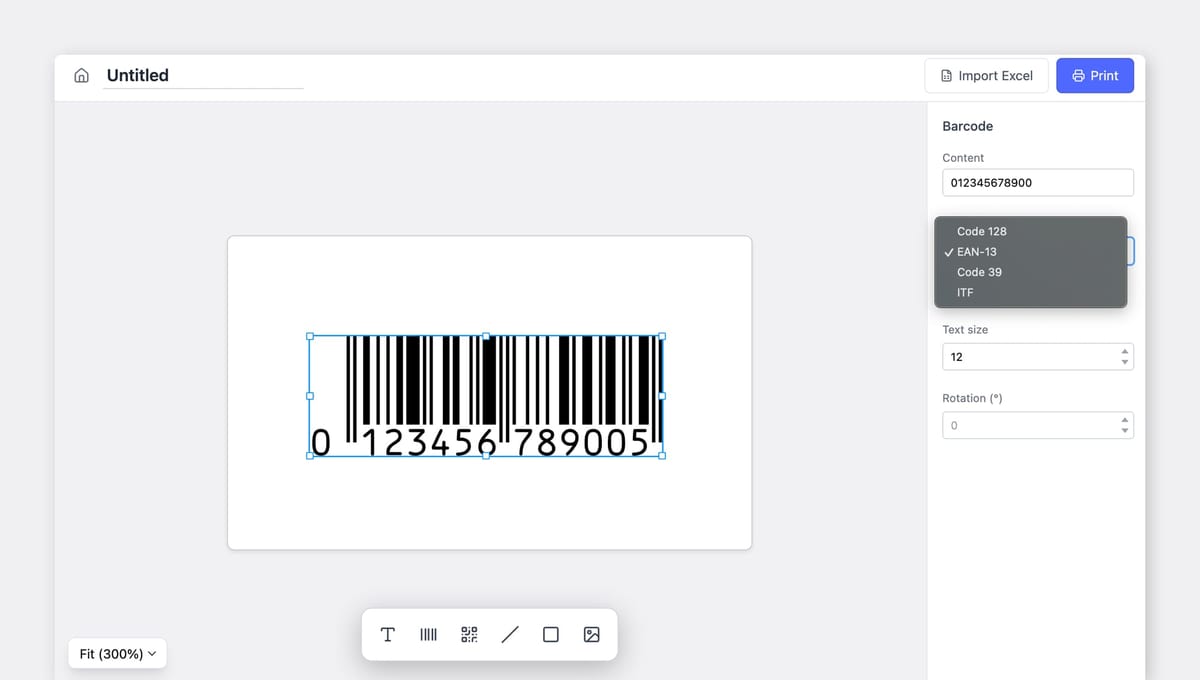
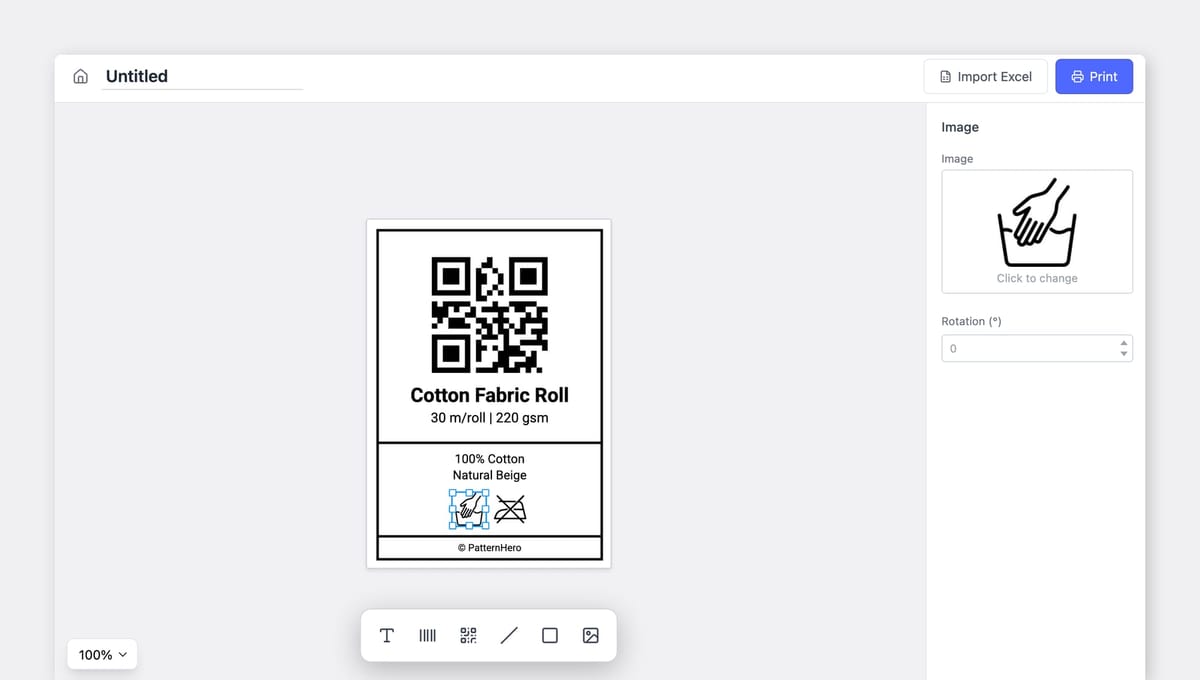
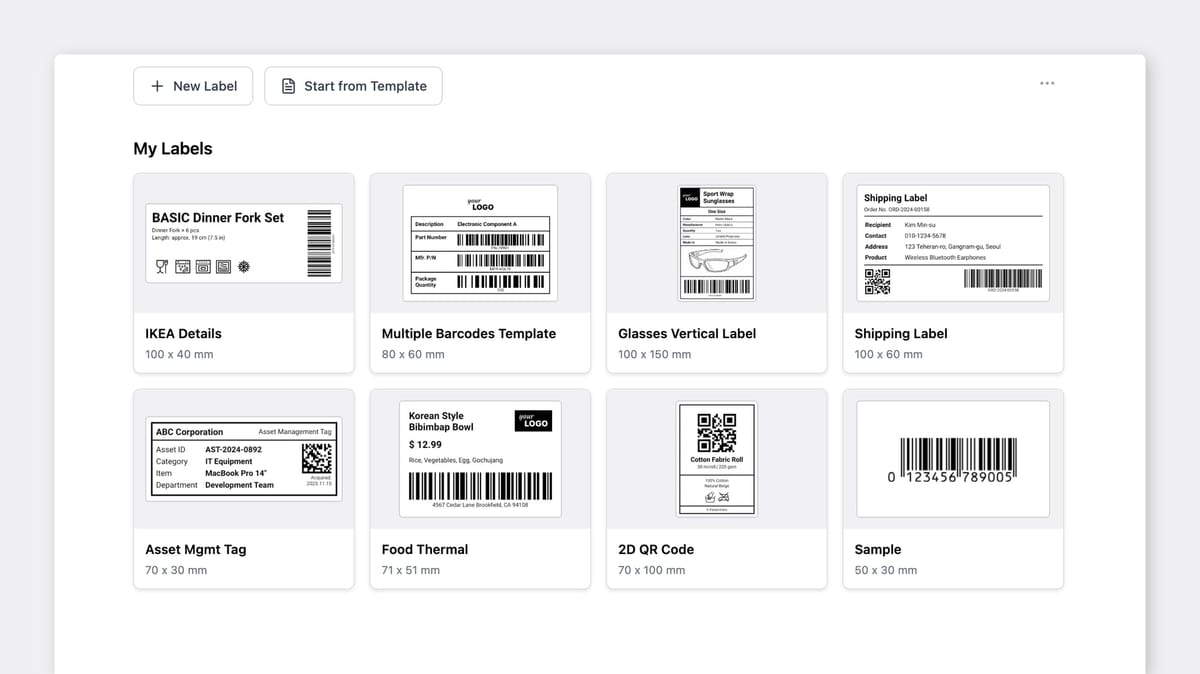
You can add your product name, options, logo, and any shapes you want, then print — either on a thermal printer or on a standard printer with label sheets.
Two decisions
First, a product that a retailer or marketplace will scan needs a GTIN from GS1 US: a single $30 code for a few items, or a company prefix for a larger catalog.
Second, keep your standard UPC or EAN barcode now, and add a 2D code to packaging when your retail partners move to it. The label design that sits on top of the number, you can build in BoxHero.
Ready to design and print your barcode labels?
Start a free 30-day trial with every feature included.
RELATED POSTS
 Heehong Moon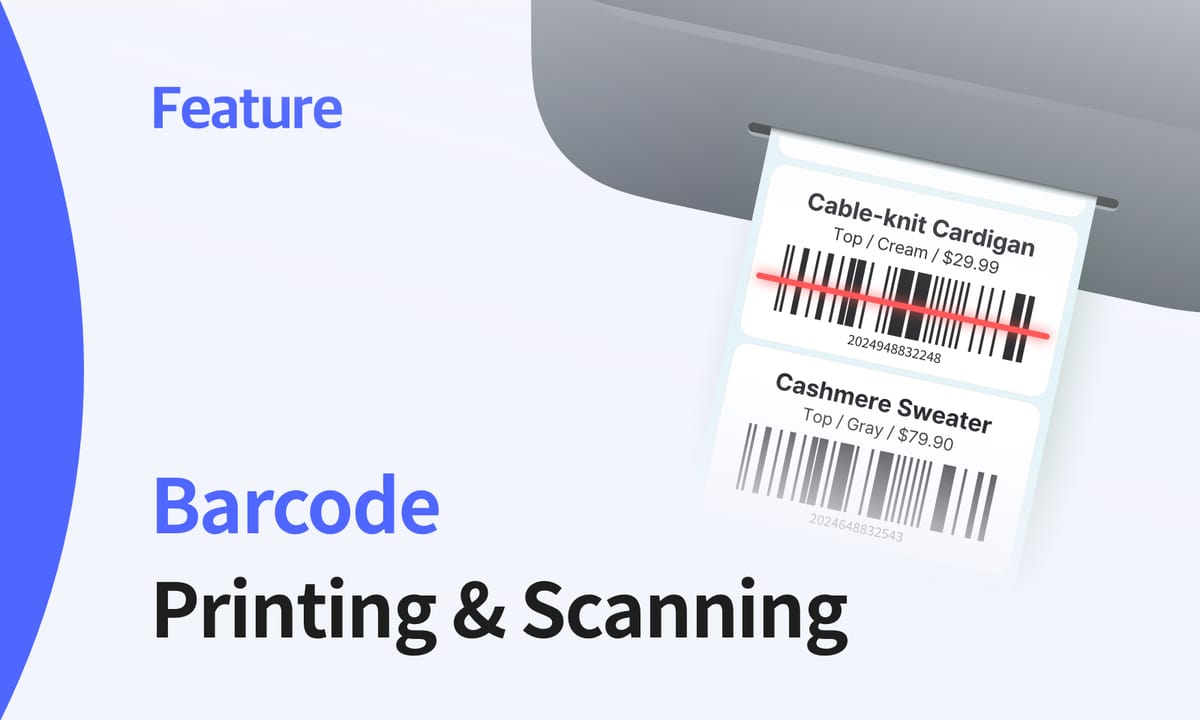
 BoxHero
 Antonette Tagnipez